
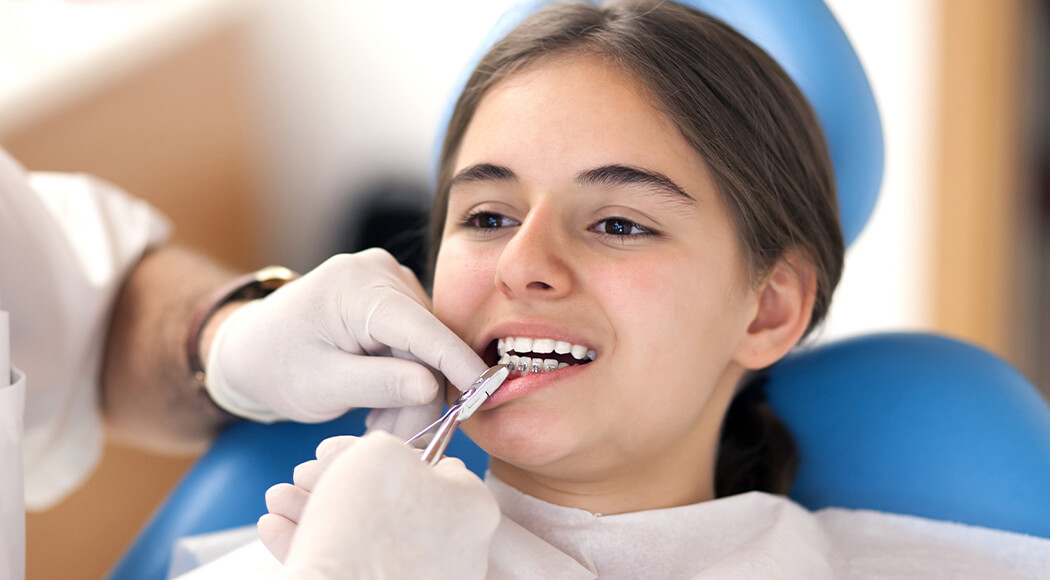
At Aberdeen Orthodontics in George Street, our Specialist Orthodontists use iTero 3D scanning and Dental Monitoring to reduce in-person visits. Fewer missed lessons, easy parking, and clear family plans are central to our approach.
The Right Time to Start
There is no single best age for every child. Many teens start active orthodontic treatment once most adult teeth are in, usually between 12 and 15. Some bite issues benefit from early interceptive care or functional appliances during growth, often around ages 10 to 13.
A Specialist Orthodontist reviews tooth eruption, jaw growth, and space to decide whether to start soon or monitor until the timing is right.
Invisalign® Teen at a Glance
Invisalign® Teen uses clear, removable aligners with wear indicators. They are discreet and easy to manage at school.
- Wear time: 20 to 22 hours per day, removed for meals and brushing
- School routines: No food restrictions; travel case and mini-toothbrush for clean-ups
- Sport and music: Aligners can be removed as advised, then replaced
- Complexity: Suitable for mild to moderate cases; attachments, elastics, and refinements extend capabilities
Dental Monitoring supports Invisalign® Teen with smartphone scans, reducing in-clinic visits and helping teens miss fewer lessons.
Fixed Metal Braces
Metal braces remain the most versatile for complex movements and rotations. Modern brackets are smaller and smoother than in the past.
- Wear time: Braces work 24/7, no risk of forgetting them
- School routines: Avoid hard or sticky foods; maintain strong brushing and interdental cleaning
- Sport and music: Mouthguards for contact sports; wind instruments are fine after a short settling period
Some teens have staged care: fixed braces for positioning difficult teeth, followed by aligners for finishing.
Clear Ceramic Braces
Ceramic braces use tooth-colored brackets for a lower-profile look. Popular with image-conscious teens, especially for upper front teeth.
- Visibility: Less noticeable than metal, though wire is visible
- Strength: Suitable for many cases; metal may be preferred for heavy forces or lower arches
- Availability: Typically private rather than NHS
Our advanced clear ceramic systems are designed for comfort and control. A Specialist Orthodontist will advise if ceramic is suitable for your teen.
Functional Appliances and Staged Care
Functional appliances, such as Twin Blocks, guide jaw growth and improve overjet. Usually worn before braces or aligners—initially full time, then evenings. Compliance is key. Bite improvement is followed by alignment with Invisalign® Teen or fixed braces.
Treatment Duration and Daily Wear
- Length: Many teen cases take 12 to 24 months; simple alignment can be faster, complex corrections longer
- Appointments: Dental Monitoring keeps visits efficient, spotting issues early and pacing aligner changes safely
- Retainers: Nightly wear is usually recommended long term to maintain results
Guidance is provided on cleaning, food choices, and comfort. Wax, soft foods, and chewies help during settling periods.
NHS Pathways and Private Access for Under-18s
NHS orthodontics in Scotland assesses clinical need. General dentists refer children, and a Specialist Orthodontist confirms eligibility. NHS options usually include metal braces; clear ceramic and Invisalign® Teen are typically private.
Private care offers faster access, more discreet options, and flexible scheduling. Finance options are available, with a bespoke written estimate after assessment.
Planning Around Half-Term and Summer
- Book assessments near school breaks
- Schedule fittings at the start of holidays
- Use Dental Monitoring for remote check-ins
- Plan mid-course refinements or retainer fittings during holiday windows
Our George Street location offers free on-site parking for quick after-school visits.
Is Invisalign® Teen as Good as Braces?
For many mild to moderate cases, Invisalign® Teen achieves comparable outcomes with consistent wear. Some complex movements remain more efficient with fixed appliances. We explain trade-offs for your teen’s bite and recommend the option balancing appearance, predictability, and practicality.
Quick FAQ for Parents
- Best age for invisible braces: Often 12–15 once adult teeth have erupted
- Teen orthodontics options in Aberdeen: Invisalign® Teen, fixed metal braces, clear ceramic braces, and functional appliances
- Is Invisalign® Teen as good as braces? Yes for many cases with 20–22 hours daily wear; fixed braces preferred for some complex movements
- How long do braces stay on? 12 to 24 months, followed by retainers
- Do the NHS offer clear braces? NHS under-18s usually receive metal braces; ceramic and Invisalign® Teen are private
Summary
- Invisalign® Teen, fixed metal braces, and clear ceramic braces all have strengths
- Dental Monitoring reduces in-clinic visits
- Functional appliances may precede braces when growth guidance is needed
- Typical treatment is 12–24 months with long-term retainers
- NHS pathways support eligible under-18s; private care provides faster access and discreet options
To plan a teen assessment around half-term or summer, call 01224 641 928 or book a consultation. We will help choose the right start date and appliance so your child begins treatment confidently.
Back Aberdeen Orthodontics


 Open in Google Maps